Technical Grade
SS 304
Surface Texture
Mirror / Matte Specialist
Technical Reading
SS 304 vs. SS 316: Technical Buffing & Mirror Finishing Requirements
Industrial Sauce Pot Buffing
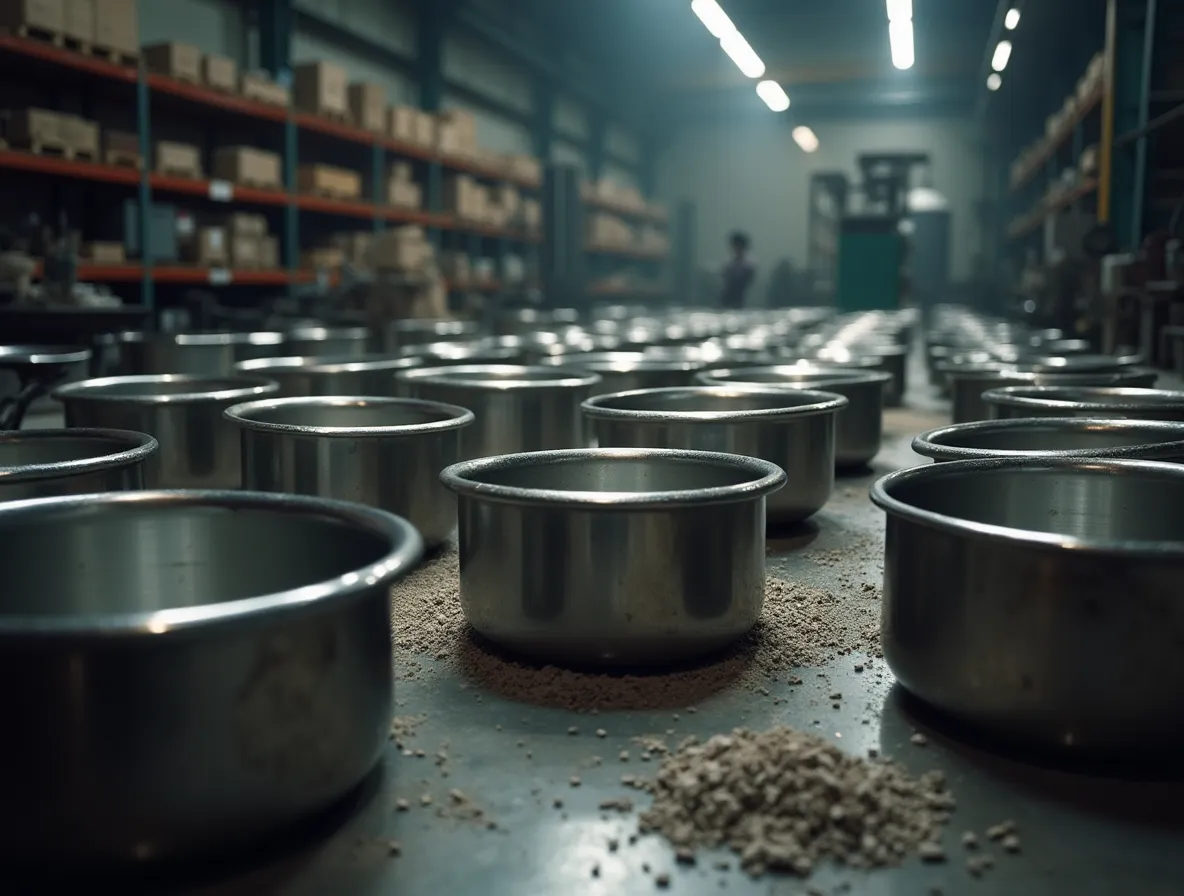
Industrial sauce pot buffing at Raja Buffing Works is a multi-stage process engineered for commercial kitchenware manufacturers and export-grade cookware brands in Maharashtra. Our 20-motor buffing array handles thermal blueing removal at weld seams, seamless induction base transitions, and food-contact mirror finishing to Ra < 0.2μm -- the surface roughness threshold required for hygienic stainless steel cookware. Every batch is processed with SS grade-specific compound assignments to prevent surface thinning on SS 304, SS 304L, and SS 316.
Engineering Specs
The Finishing Workflow
Heavy-grit grinding for weld-seam leveling and thermal blueing removal
Sisal wheel pre-polishing for surface scratch removal and grain normalization
Grade-matched compound assignment (SS 304 vs SS 316 separate passes)
Coloring stage with Green Chrome compound for deep mirror reflection
Induction base transition zone finishing pass
Quality audit under high-intensity LED reflection test
Ra value spot-check on sample units from batch
Service Includes
Why Surface Finish Quality Matters for Commercial Sauce Pots
A commercial sauce pot operates in continuous high-heat conditions, repeated mechanical washing, and direct food contact. Surface finish quality is not cosmetic -- it is functional. A mirror interior finish at Ra < 0.2μm prevents food solids from bonding to micro-pits in the surface, which reduces cleaning time, extends hygiene compliance intervals, and prevents bacterial colonization in surface scratches. For export-grade cookware, international buyers specify Ra values as a contract requirement. A pot that fails surface roughness inspection at the destination port is a returned consignment. Our buffing process eliminates that risk at the source.
Thermal Blueing Removal at Weld Seams
The most common surface defect on commercial sauce pots is thermal blueing -- the blue-gold discolouration that forms around handle attachment points and base-capping weld seams during fabrication. This is caused by heat oxidation of the chromium layer in stainless steel. Standard polishing cannot remove thermal blueing; it requires heavy-grit grinding to get below the oxidized layer, followed by compound-matched pre-polishing to restore surface uniformity before the mirror stage begins. This weld-seam leveling step is built into every sauce pot batch we process.
SS 304 vs SS 316 for Sauce Pot Buffing: What Changes
SS 304 and SS 316 are the two most common grades for commercial sauce pots. SS 316 contains 2-3% molybdenum, which increases corrosion resistance but also increases work hardening during buffing. If you apply SS 304 compound pressure to SS 316, you risk micro-tearing the surface rather than smoothing it. Our machinery is calibrated to run SS 316 batches at reduced RPM with a different compound formulation. Mixed-grade consignments -- SS 304 and SS 316 in the same order -- are processed in separate machine passes with individual grade assignments. For a deeper technical breakdown, see our SS 304 vs SS 316 buffing guide.
Induction Base Transitions and Seamless Finishing
Sauce pots with induction-compatible bases present a specific finishing challenge at the transition zone between the pot body and the base disc. The joint creates a visible step and often a weld discolouration ring. Our finishing workflow includes a dedicated transition zone pass that levels this joint and extends the mirror finish continuously across the base edge -- eliminating the visible demarcation line that manufacturers consider a quality defect.
Bulk Batch Capacity and Dispatch Logistics
Our 20-motor buffing array is configured for throughput of 500+ pieces per hour. Standard sauce pot batches receive 24-48 hour turnaround from receipt of consignment at our Vasai East facility. High-precision export orders requiring Ra < 0.2μm documentation for international buyers are scheduled for 72-hour processing to allow sample verification before full batch dispatch. We serve manufacturers across Vasai, Boisar, Palghar, Thane, and the broader Mumbai industrial corridor. Contact us to discuss dedicated batch scheduling for recurring production runs.
HSN 7323 Job-Work Compliance for Sauce Pot Manufacturers
All sauce pot buffing job-work is invoiced under HSN Code 7323 (Household articles of iron or steel including stainless steel). B2B manufacturers can claim GST input tax credit on the job-work service charge. We issue a full tax invoice with GSTIN, HSN code, and job-work description on every batch. For a complete breakdown of how HSN 7323 job-work billing is structured and what documents you need to claim input credit, read our HSN 7323 compliance guide for manufacturers.
Mirror Finish vs Matte Finish: Which Is Right for Your Batch?
| Aspect | Mirror Finish | Matte / Satin Finish |
|---|---|---|
| Surface Roughness | Ra < 0.2μm -- hygienic mirror luster | Ra 0.5μm-0.8μm -- fingerprint-resistant satin |
| Best Use | Commercial kitchens, export cookware, dairy-grade applications | Premium designer cookware, retail display, high-end hospitality |
| Scratch Visibility | Shows fine scratches over time in high-use environments | Grain structure disperses surface wear -- stays consistent longer |
| Cleaning | Smooth surface -- easy to clean, resists food adhesion | Slightly more texture -- still food-safe, requires directional wiping |
| Processing Time | Standard 24-48h batch turnaround | Standard 24-48h batch turnaround |
Not sure which finish suits your application? Contact our finishing specialists or read our matte finishing Ra value guide.
Technical FAQ: Industrial Sauce Pot Buffing
What is the turnaround time for bulk sauce pot buffing orders?
Standard batches receive a 24-48 hour turnaround from receipt at our Vasai East facility. High-precision export orders requiring Ra < 0.2μm documentation for international buyers are processed on a 72-hour schedule to allow sample verification before full batch dispatch.
Do you handle both SS 304 and SS 316 sauce pots in the same order?
Yes. Mixed-grade consignments are accepted. SS 304 and SS 316 are processed in separate machine passes with individual compound and RPM assignments. SS 316 requires lower RPM and a different compound formulation due to its higher molybdenum content. A single HSN 7323 invoice covers the full mixed-grade consignment.
Can you remove welding marks and thermal blueing from sauce pot handles and base joints?
Yes. Thermal blueing removal is a core stage in our sauce pot workflow. Heavy-grit grinding removes the heat-oxidized chromium layer at weld seams, followed by sisal wheel pre-polishing to normalize the surface before the mirror compound stage begins. This is included in all sauce pot batches, not a separate charge.
Is your sauce pot buffing process food-grade compliant?
Yes. We finish SS 304 and SS 316 grade sauce pot interiors to Ra < 0.2μm. This is the surface roughness threshold recognized for food-contact stainless steel -- smooth enough to prevent food solid adhesion and bacterial colonization in surface pits. Mirror interior finish is standard on all sauce pot batches unless matte is specified.
What is the minimum batch size for sauce pot job-work?
We accept batches from 100 units upward. For high-volume recurring production runs, contact us to discuss dedicated batch scheduling and volume pricing. All orders are invoiced under HSN 7323 with full GST documentation.
Do you serve sauce pot manufacturers outside Vasai -- in Boisar, Palghar, or Thane?
Yes. Our primary dispatch hub is Vasai East (401208) but we handle regular consignments from manufacturers across Boisar, Palghar, Thane, and the greater Mumbai industrial belt. Contact us to discuss logistics for your location.
Related Services
All Services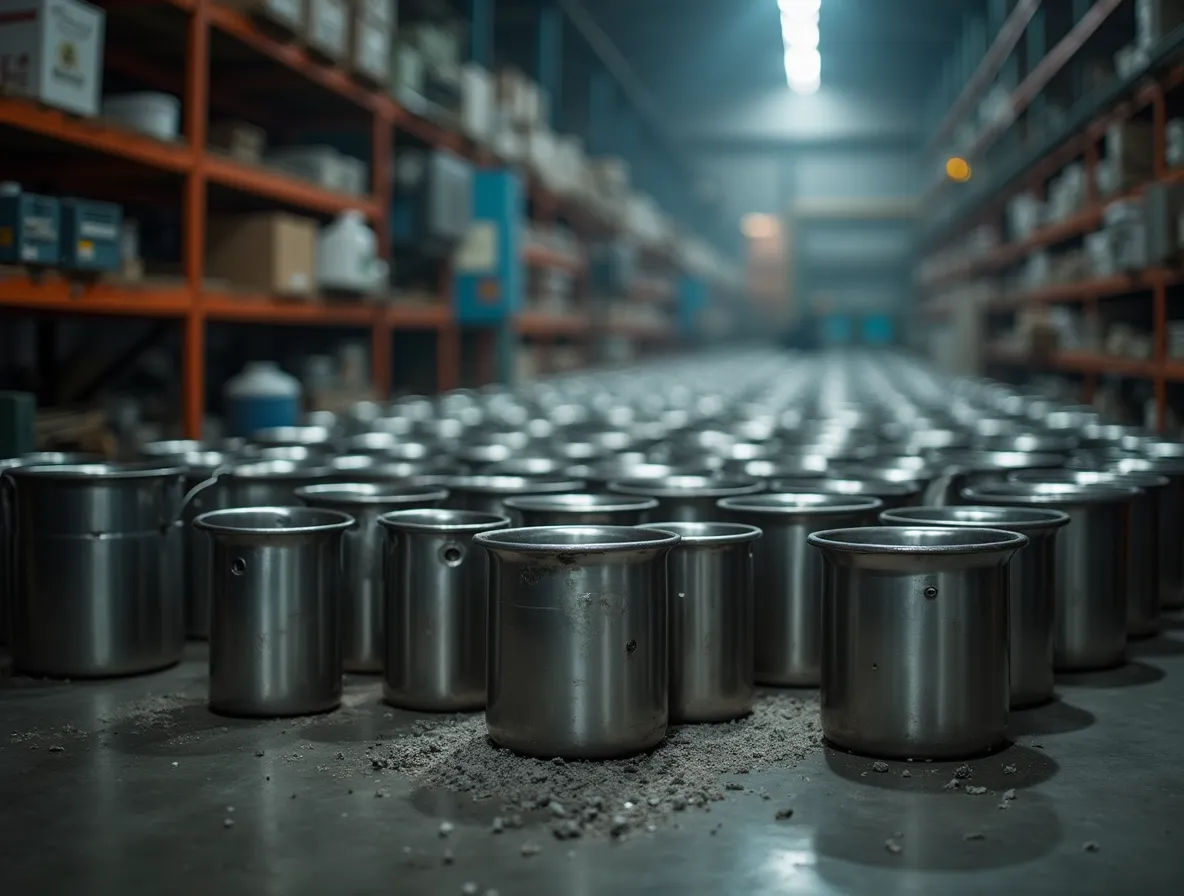


Technical Insight
SS 304 vs. SS 316: Technical Buffing & Mirror Finishing Requirements
Equipment
See the machinery behind this service
Every finishing operation on this page runs through a grade-calibrated machine protocol. Our 20+ motor fleet, matte polisher, beading lathe, and fiber laser are available for inspection.