Technical Grade
Silver (.925 / .999)
Surface Texture
Original Brilliance Restoration
Technical Reading
B2B Care Protocols: Extending the Luster of Commercial Kitchenware
Silverware Restoration
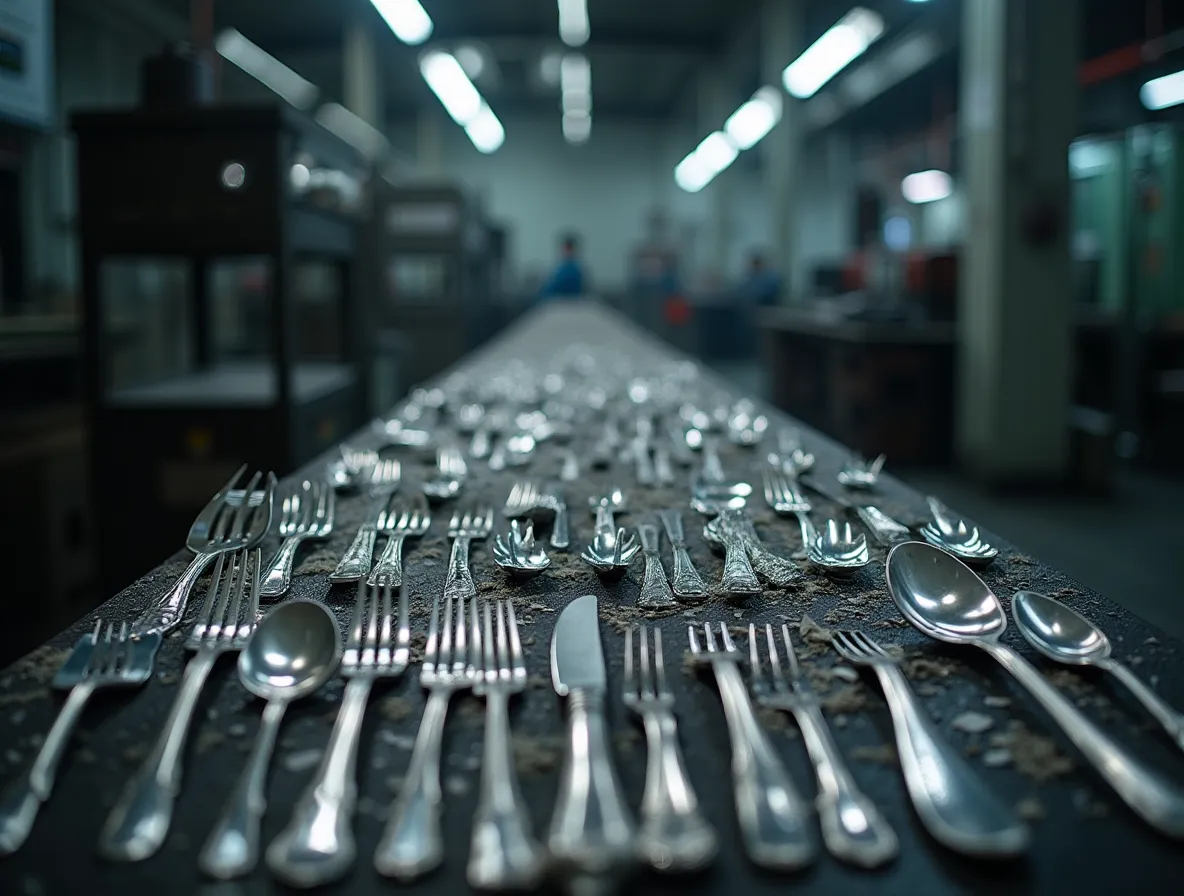
Silverware restoration is the most material-sensitive buffing operation we perform. High-heat buffing removes oxidation by removing metal -- on antique pieces, thin-gauge silverware, or silver-plated items, this causes irreversible dimensional change and plating breakthrough. Our low-heat soft-cloth protocol uses controlled pressure and purpose-formulated restoration compounds to lift silver sulphide tarnish and surface oxidation without contacting the base metal. Solid silver, silver-plated over brass or copper, and decorative brass pieces are all supported. The result is original brilliance restored at Ra < 0.1μm -- mirror grade -- without surface thinning or plating damage.
Engineering Specs
The Finishing Workflow
Visual assessment -- oxidation depth, plating condition, edge profile, mechanical damage check
Material classification -- solid silver / silver-plated / brass -- and plating thickness estimation
Compound selection matched to material category and tarnish depth
Low-heat soft-cloth oxidation removal pass -- chemical lift of silver sulphide layer
Beading lathe edge and rim restoration for decorative profile pieces
Secondary soft-cloth brilliance pass to Ra < 0.1μm
Final brilliance audit against reference standard under high-intensity directional lighting
Pre-dispatch assessment -- pieces that cannot meet restoration standard flagged before packaging
Service Includes
Why Standard Buffing Damages Silverware -- and What the Correct Process Does Instead
The fundamental problem with applying standard industrial buffing to silverware is that buffing compounds are abrasive. They work by removing a thin layer of surface material to expose the undamaged metal below. On thick stainless steel utensils this is the correct approach -- there is enough material depth that controlled removal produces a clean surface. On silverware, the same approach is destructive. Solid silver is a soft metal -- significantly softer than stainless steel -- and even a moderate buffing compound removes measurable silver with every pass. On silver-plated items the risk is more acute: plating thickness is typically 5-25 microns. A standard buffing pass can remove several microns per cycle, meaning a silver-plated piece can be stripped to the base metal in two or three passes if the wrong compound or pressure is used. Our low-heat soft-cloth protocol solves this by targeting the oxidation layer chemically rather than abrasively. The restoration compound reacts with and lifts silver sulphide -- the black tarnish compound -- without requiring mechanical abrasion of the base metal. Pressure is applied only to ensure compound contact, not to drive abrasive particles into the surface. The result is tarnish removed, brilliance restored, and no measurable metal loss.
Silver Sulphide: What Tarnish Is and Why It Forms
Silver tarnish is not rust and it is not dirt. It is silver sulphide (Ag₂S) -- a chemical compound formed when silver reacts with hydrogen sulphide or sulphur dioxide in the atmosphere. The reaction is slow at room temperature but accelerates in environments with higher sulphur content: urban air pollution, rubber packaging materials, certain foods (eggs, mustard, onions), and even some paper types emit sulphur compounds that drive tarnish formation. The resulting silver sulphide layer is black or grey and strongly adherent to the silver surface. Standard polishing cloths work on light tarnish by providing a mild abrasive that removes the very surface of the Ag₂S layer. For heavier tarnish accumulation -- common on antique pieces or stored catering silverware -- a more controlled restoration process is required to lift the full tarnish depth without damaging the silver beneath.
Solid Silver vs Silver-Plated vs Brass: How the Protocol Changes
Each base material requires a different compound formulation and pressure setting. Solid silver (typically .925 sterling or .999 fine silver) is soft and ductile -- it can handle moderate compound contact but not abrasive pressure. Silver-plated items (silver layer over brass or copper base) are assessed for plating thickness before any compound is applied. Thin plating (under 10 microns) receives the gentlest formulation available and a single-pass maximum. Thick decorative plating (25+ microns, common on hotel silverware) can handle a slightly more aggressive compound. Brass items with surface lacquer or patina require lacquer removal as a first step before any compound is applied, followed by the standard low-heat protocol. We do not use the same compound setting across all three material types -- each piece category is assessed and assigned individually before processing begins.
Beading Lathe Edge and Rim Restoration
Many antique and premium silverware pieces feature beaded edges, decorative rims, and embossed rim profiles. These cannot be buffed on a standard flat-wheel system without the wheel contact distorting or flattening the raised profile. Our beading lathe unit handles rim restoration specifically for these pieces -- rotating the item at controlled speed while a precision tool maintains contact with the rim profile, restoring the edge geometry and surface brilliance simultaneously. This is the same beading lathe used for SS utensil edge work, but with a purpose-formulated soft compound and significantly lower contact pressure for silverware applications. For antique pieces with intricate rim profiles, we assess the beading geometry before committing to lathe restoration.
Bulk Catering Silverware: Hotel and Restaurant Job-Work
We handle both individual antique restoration pieces and high-volume bulk catering silverware batches. Hotel silverware -- cutlery sets, serving bowls, tea service pieces, chafing dish components -- tarnishes at an accelerated rate in catering environments due to contact with sulphur-rich foods and repeated exposure to dishwasher chemicals that strip protective surface layers. Bulk catering silverware batches from hotels, restaurants, and catering operations across Vasai, Mumbai, Thane, and Palghar are accepted with 24-48 hour dispatch on standard consignments. All bulk job-work is invoiced under HSN Code 7323 with full GST documentation. For recurring catering clients, we can set up a maintenance polishing schedule aligned with your service intervals.
Post-Restoration Storage and Maintenance to Extend Finish Longevity
The rate at which restored silverware re-tarnishes depends almost entirely on storage and handling conditions. Air exposure is the primary driver -- silverware stored open to atmosphere in sulphur-rich urban environments can re-tarnish within weeks of restoration. Anti-tarnish storage solutions (sealed pouches with anti-tarnish strips, felt-lined cases, or acid-free tissue wrapping) slow the sulphidation reaction significantly. For catering silverware in active service, the cleaning protocol matters: chlorine-based dishwasher detergents strip residual protective layers and accelerate tarnish. Phosphate-based or silver-safe detergents significantly extend the service interval between polishing cycles. We cover these protocols in detail in our B2B care protocol guide for commercial kitchenware.
What We Cannot Restore: Honest Limits of the Process
Not every damaged silverware piece can be fully restored through buffing. Pieces with deep mechanical damage -- dents, cracks, structural deformation -- require silversmithing repair before restoration buffing is possible. Pieces where the silver plating has worn through to the base metal cannot have plating restored through buffing; that requires re-plating, which is a separate electroplating process we do not perform. Pieces with active corrosion that has penetrated below the surface layer (pitting rather than surface tarnish) may not achieve full brilliance through soft-cloth protocol alone. In all these cases, we assess and communicate the expected outcome before processing begins. We do not process pieces that cannot be restored to a standard we are willing to put our name on.
Mirror Finish vs Matte Finish: Which Is Right for Your Batch?
| Aspect | Mirror Finish | Matte / Satin Finish |
|---|---|---|
| Metal Removal | Low-heat soft-cloth: zero measurable metal removal -- oxidation lifted chemically | Standard high-heat buffing: removes measurable silver or plating per pass |
| Plating Safety | Safe for thin plating (5-25 microns) -- compound and pressure adjusted per thickness | Standard buffing risks plating breakthrough on pieces under 25 microns |
| Antique Piece Compatibility | Suitable -- no dimensional change, no profile distortion | Not suitable -- abrasive removal alters surface geometry on soft silver |
| Tarnish Removal Depth | Full silver sulphide layer lifted -- including heavy accumulated tarnish | Surface tarnish only -- aggressive polishing on light tarnish, not deep restoration |
| Edge and Rim Profiles | Beading lathe handles decorative rims without distorting raised profiles | Flat-wheel buffing flattens or distorts embossed rim geometry |
| Final Surface Roughness | Ra < 0.1μm -- true mirror grade brilliance | Variable -- depends on compound aggressiveness and operator control |
Not sure which finish suits your application? Contact our finishing specialists or read our matte finishing Ra value guide.
Technical FAQ: Silverware Restoration
Will the restoration process remove any silver from the surface?
No. Our low-heat soft-cloth protocol lifts silver sulphide oxidation chemically rather than abrasively. Standard high-heat buffing removes a measurable layer of silver or plating per pass -- our restoration process does not. This is the fundamental difference between restoration buffing and standard industrial buffing, and why standard buffing equipment is not suitable for silverware.
Can you restore silver-plated items without breaking through to the base metal?
Yes. Silver-plated items are assessed for plating thickness before any compound is applied. Plating under 10 microns receives the gentlest compound formulation available and a single-pass maximum. Thicker decorative plating (25+ microns, common on hotel silverware) can handle a slightly more active compound. We do not apply a single compound setting to all plated pieces -- each category is assessed individually.
What is the difference between tarnish removal and standard polishing?
Standard polishing is an abrasive process -- it removes surface material to expose clean metal below. Tarnish removal for silverware is a chemical process -- the restoration compound reacts with and lifts silver sulphide (Ag₂S) without mechanical abrasion of the base metal. For silverware, the chemical approach is the only method that removes tarnish without simultaneously removing silver.
Do you handle large bulk catering silverware batches from hotels and restaurants?
Yes. Bulk hotel silverware, restaurant cutlery sets, serving bowls, and catering components are accepted from 100 units upward. Standard bulk consignments dispatch within 24-48 hours. All bulk job-work is invoiced under HSN Code 7323 with full GST documentation for B2B input tax credit eligibility. For recurring catering clients we can align polishing schedules to your service intervals.
How long does the restored finish last before re-tarnishing?
Re-tarnishing rate depends almost entirely on storage and handling. Silverware stored open to urban atmosphere can re-tarnish within weeks. Anti-tarnish storage (sealed pouches, felt-lined cases, acid-free wrapping) dramatically slows the sulphidation reaction. For catering silverware in active service, switching from chlorine-based dishwasher detergents to phosphate-based or silver-safe detergents significantly extends the interval between polishing cycles. Full maintenance guidance is in our B2B care protocol guide.
Can you restore pieces with decorative beaded rims and embossed profiles?
Yes. Decorative rims, beaded edges, and embossed profiles are handled on our beading lathe unit rather than on the flat-wheel buffing system. The lathe rotates the piece at controlled speed while a precision tool maintains contact with the rim profile -- restoring edge geometry and surface brilliance without the distortion that flat-wheel contact causes on raised profiles.
What types of damage cannot be restored through buffing alone?
Buffing cannot correct structural damage (dents, cracks, deformation), worn-through plating (base metal exposed), or deep pitting corrosion that has penetrated below the surface tarnish layer. These conditions require silversmithing repair or re-plating before restoration buffing is possible. We assess all pieces before processing and communicate expected outcomes upfront -- we do not process pieces we cannot restore to a standard we stand behind.
Related Services
All Services
Technical Insight
B2B Care Protocols: Extending the Luster of Commercial Kitchenware
Equipment
See the machinery behind this service
Every finishing operation on this page runs through a grade-calibrated machine protocol. Our 20+ motor fleet, matte polisher, beading lathe, and fiber laser are available for inspection.